 Tony Carnevale

The short answer
Almost all of it is automation: 98% of the visits from China and 96% from Singapore were bots on websites tracked by Venbit Intelligence Research over 90 days. Most of it is a scraper fleet that arrives direct, opens one page and leaves. Filter it out of your reports and judge the month on leads.
What to know
- Over 90 days, 98% of the visits from China to tracked websites were bots, about 49 for every person, and they reached nearly every tracked website.
- Singapore was 96% bots. Hong Kong came in at 73% and Germany at 69%.
- Most bot visits by count came from the United States: 80% of every bot visit recorded, against about 17% from China, Singapore and Hong Kong together.
- Three bot names carry most of the wave: Offshore scraper, by far the largest, then Sogou Spider and Sogou render.
- A fleet visit is direct, one page and no time on the page, so a tool that counts it shows direct traffic and bounce rate climbing with no new leads behind them.
- Blocking whole countries at the server turns away customers abroad and misses scripts on other countries' addresses. Filtering in analytics takes the visits out of your numbers and keeps them on record.
Nearly all the traffic from China and Singapore is bots. Venbit Intelligence Research counted visits on tracked small business websites for 90 days, and 98% of the visits from China and 96% of the visits from Singapore were automation. Most of it is one scraper fleet that arrives with no referrer, opens one page and leaves. Pick a country below to see its split, and type in your own count to see how many people are likely behind it.
Check a country
Check the visits from one country
Pick the country that spiked in your report. The bar shows how its visits split on tracked websites, and three questions about the visits themselves give you a verdict.
China
Reached nearly every tracked website · 90 days
98%of 15,640 recorded visits were bots
People3122%
Bots15,32898%
Optional. From any analytics report.
Likely people among them
n/a
Enter your visits to see it
Check the suspicious visits themselves
Open the visits from that country in your analytics for the day they spiked, and answer for most of them.
Did they arrive as direct?
No referrer: no search, ad or link sent them.
Did each visit open one page?
Pages per visit of 1, or a landing page and nothing after it.
Did each stay under ten seconds?
Engagement time near zero, or a bounce in your report.
Answer the three questions to see what the visits are.
Venbit Intelligence Research, tracked websites, 90 days in autumn 2026. Visits that ran the page script, sorted into people and bots by the Venbit Intelligence bot filter. Country comes from the visitor's IP address. Nothing you type leaves your browser.
The fourteen countries in the tool cover every visit that loaded a page and ran the tracking script on the tracked websites over three months, sorted into people and bots by the filter Venbit Intelligence runs on every visit. Country comes from the visitor's IP address, which holds up at the level of a country and drifts at the level of a town.
97% of visits from China and Singapore were bots
Singapore came out almost the same at 96%, with 8,890 bots against 331 people. I expected Singapore to look cleaner than China, and the two are close to identical. The reason is in how the clouds are laid out. Chinese cloud providers run overseas regions in Singapore and Hong Kong, so a script on those networks carries a Singapore address as easily as a Chinese one.
Share of recorded visits that were bots, by country
- China98%
- Singapore96%
- Hong Kong73%
- Germany69%
- Japan42%
- United States36%
- Mexico33%
- Brazil25%
- United Kingdom9%
- India6%
- France4%
- Canada3%
- Australia2%
- Spain1%
Read the foot of that chart as carefully as the top. Spain, Australia, Canada and France send real visitors to these websites and almost no bots, so distance tells you nothing by itself. What sets China, Singapore and Hong Kong apart is the mix: a few hundred people from each over the quarter, buried under thousands of scripts.
| Country | People | Bots | Bot share |
|---|---|---|---|
| China | 312 | 15,328 | 98% |
| Singapore | 331 | 8,890 | 96% |
| Hong Kong | 187 | 495 | 73% |
| Germany | 649 | 1,417 | 69% |
| Japan | 403 | 296 | 42% |
| Mexico | 530 | 256 | 33% |
| Brazil | 482 | 160 | 25% |
| United Kingdom | 1,571 | 164 | 9% |
| India | 1,986 | 126 | 6% |
| France | 3,104 | 113 | 4% |
| Canada | 3,917 | 129 | 3% |
| Australia | 1,460 | 29 | 2% |
| Spain | 3,324 | 38 | 1% |
Most bot visits come from the United States
The biggest surprise in this data runs against the worry that brings people here. Four in five bot visits recorded across the tracked websites came from US addresses. China, Singapore and Hong Kong together made about one in six.
- 80%
- of every bot visit recorded came from US addresses
- 36%
- of all visits from the United States were bots
- 17%
- of bot visits came from China, Singapore and Hong Kong together
- 830
- people from those three countries in 90 days
Bots run where servers are, and the servers that read small business websites sit mostly in American data centers. The two biggest names in our bot table belong to American companies: Meta AI with about 40% of all bot visits and Google's ad checker with 16%. A US business never notices its American bots because they mix in with its American customers. Chinese bots stand out for the opposite reason, since the business has nobody in China for them to hide among.
By count, then, the bot problem on a small business website is mostly an American one, and the China and Singapore wave is the visible part of it. The full picture, with every kind of bot and how a website tells a visit from a script, is in how much of your website traffic is bots.
What Lanzhou and Singapore traffic looks like
Open the visits behind a sudden jump from China or Singapore in Google Analytics, or in any other tool, and the rows repeat themselves. News coverage of the wave in December 2025 named Lanzhou in China and Singapore as the towns in the reports, and owners have been posting about it in the Google Analytics Community under titles like Strange Bot Traffic From Singapore Impacting Rankings and Traffic. The shape of each visit matches what we record.
Direct, with no referrer
No search, ad or link sent the visit, so the report files it under direct.
One page
The visit lands on a single page and opens nothing after it.
No time, no action
Engagement time sits near zero, with no click, tap or form. Some scroll the page to look busy, which proves nothing.
A plain copy of Chrome
The browser name reads as ordinary Chrome, so no list of known bots catches it.
Lanzhou or Singapore
Towns you have never sold to top the location report, and the addresses belong to Chinese cloud networks.
A new visitor every time
Each visit arrives as a first-time visitor, so new users climb along with sessions.
Behind those rows, three bot names in our data account for most of the wave.
Bot visits behind the wave, by name
- Offshore scraper14,768
- Sogou Spider4,859
- Sogou render553
Offshore scraper is the name Venbit Intelligence gives a direct visit from China, Singapore or Hong Kong that does nothing a person does. Sogou, a Chinese search engine, sends Sogou Spider to crawl under its own name. Its second pass, Sogou render, is a plain Chrome visit that loads the page the spider fetched moments before. The two names that apply only to those three countries, Offshore scraper and Sogou render, cover 15,321 visits, about six in ten of the bot visits from China, Singapore and Hong Kong.
Why bots inflate direct traffic and bounce rate
A tool that counts these visits as people gets every number wrong in the same direction. Each fleet visit is a direct session of one page with no engagement, so direct traffic climbs, bounce rate rises, time on site falls and pages per visit drop, all while leads stay flat. Take a site with 600 visits a month, close to the median of 609 on the websites we track, a direct share of 32%, which is the median in our data, and a bounce rate of 50% for the sake of the sum.
The month before the wave
- 600 visits
- 192 of them direct, 32%
- Bounce rate 50%
The same month with 300 fleet visits
- 900 visits
- 492 of them direct, 55%
- Bounce rate 67%
- Not one extra lead
The report now reads as a site that became more popular and less interesting in the same week, and neither is true. GA4 removes known bots automatically, using the IAB's list of spiders and bots and Google's own research, and Google's help page says the exclusion cannot be switched off and the amount removed cannot be seen. A plain copy of Chrome is on no list, so a GA4 report counts it as a visitor.
Direct traffic has other causes too, from links in texts and emails to apps that strip the referrer. What direct traffic is and why it runs high sorts them out, with the share each source holds on the websites we track.
Do not block whole countries at the server
Blocking China and Singapore in a firewall or a hosting panel is one fix owners try, and the write-ups on this wave list it with a warning about shutting out real users. A block does stop visits from those addresses, and it costs more than it saves.
Block the countries at the server
- Turns away a customer who opens your site from a hotel in Singapore, or through a work VPN that exits there
- Does nothing for scripts that use addresses in other countries
- Leaves the bots on US addresses, 80% of the bot count, where they were
Filter the countries in analytics
- Takes the visits out of the report you judge the month by
- Keeps every visit on record, so a real enquiry from abroad is still there
- Changes nothing a visitor sees
Germany is the case I keep coming back to. It is 69% bots in our data, and the bot filter treats Falkenstein in Saxony, where Hetzner runs its main data-center park, as a data-center town. The network-wide check in Venbit Intelligence has also named groups of visitors in Seoul, Tokyo and Vietnam, each sharing a town, a device and a browser, that open site after site and almost never act. Block China, and the same kind of script reaches you from somewhere else.
Filter the reports and judge on leads
- 1
Check the visits before you act
Use the three questions in the tool above on the day of the spike. Direct, one page and no time on the page is the fleet. Visits from a link or a search that read on are people, wherever they are.
- 2
Filter them out of the report you read
In GA4, build a segment in Explore that leaves out the country together with very short visits, the workaround the write-ups on this wave describe. It works in Explore and not in the standard reports, and it hides the visits from that view without deleting anything.
- 3
Judge the month on leads
Forms sent and phone taps do not move when a fleet arrives. If leads held steady while visits jumped, the jump was bots. Where small business traffic comes from shows which sources bring the leads on the websites we track.
- 4
Watch for the next wave
An alert that fires on a sudden hour of visits tells you the day a wave starts, so you can read the rows while they are fresh.
- 5
Block only for load
If the bots slow the site or push up a hosting bill, ask the host to block the networks they come from, with customers abroad in mind. A country block is the last tool to reach for.
How Venbit Intelligence handles these visits
I wrote the offshore rule into the bot filter in Venbit Intelligence after this wave reached the websites we track in September 2026. Every direct visit from China, Singapore or Hong Kong now starts as a suspected bot named Offshore scraper. Bots are recorded but hidden from every number by default, so the visit sits in the bot list and stays out of the counts until it shows it is a person.
An action clears it
A click, a tap on a phone number or an email address, a link followed out, a field filled or a second page, and the visit is counted as a person.
Time and scroll do not
The fleet holds pages open and scrolls them, so neither one is taken as proof that a person is there.
Sogou's second pass
A Chrome visit from those countries that lands on the page the Sogou Spider crawled moments before is named Sogou render.
Groups across many websites
Each hour the network looks for visitors that share a town, a device and a browser, turn up on many websites and almost never act. Those groups are named Scraper fleet.
The rule decides on the visit and never on the website, so it runs the same on every site we track. A person in Singapore who reads three pages is counted the moment the second page opens.

Last 30 days · Sep 21 to Oct 21 · Worth knowing
6,447 visits from bots were kept out of your numbers.
That is 43% of everything that reached your site. Uptime monitors made 4,233, and AI crawlers made 949. Every figure on this page leaves these out.
8,510people · 57%
6,447bots · 43%
Uptime monitors4,233
AI crawlers949
Search engines and ad checkers853
SEO tools338
Link previews74
You can still see the bots whenever you want them. The bot list names each one, with its owner where it has one, so a wave arrives as a run of Offshore scraper rows with the town on each, out of your direct traffic and out of your bounce rate.
Settings has an alert for the other half of the worry. Traffic spike sends a push to Venbit Intelligence for iPhone when visits pass a number you choose in one hour, 50 unless you change it, at most once a day. It counts only the visits the bot filter let through, so a wave the filter caught stays silent and one that slips past it reaches your phone in the hour it starts.
Alerts
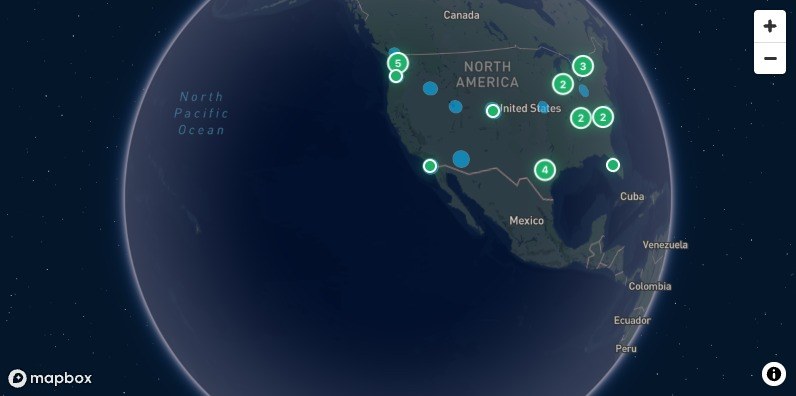
The live map shows the towns. Every town your visitors came from in the last 30 days is a dot sized by its visits, and See it in 3D turns the map into a globe. If a dot appears in a town you have never sold to, open it and the visits under it show what each one did, the same way you can watch who is on your website right now.
Live globe
23 on the site now · 18 towns · last 30 days
 © Mapbox © OpenStreetMap
On the site nowLast 30 days
How we measured this
The figures come from Venbit Intelligence Research: websites tracked in the Venbit Approved System, 21 August to 18 November 2026. A visit counts when a browser, or a script posing as one, loaded a page and ran the tracking script, and each visit was sorted into people or bots by the same filter owners see in their own reports. Country comes from the IP address.
No website is named, here or anywhere else, and no figure on this page belongs to one website alone. The country counts are pooled across all the tracked websites, so no country's figure can be traced back to one business.
See which countries send you people
Venbit Intelligence names every bot, keeps them out of your numbers and shows the towns your visitors come from. One line to install, free for 14 days, no card needed.
In Venbit Intelligence
More website analytics guides
Every question in this series, from Website Analytics for Small Business Owners.
Leads inbox4
Ad performance4
SEO tracking3
Visitor behaviour4
Feed and notifications3
Goals and measurement4
Privacy, AI and teams3
Venbit Intelligence Research19
- Average Website Visitors per Month for a Small Business
- What Is a Good Conversion Rate for a Small Business Website?
- What Time of Day Do Website Leads Come In?
- Which Day of the Week Brings the Most Website Leads?
- How to Tell If a Website Lead Is Spam
- How Much Website Traffic Comes From ChatGPT?
- Do ChatGPT Visitors Convert Better Than Google Visitors?
- Which AI Bots Read Your Website?
- Why Ad Clicks Don't Match Website Visits
- Mobile vs Desktop Website Traffic for Small Business
- How Long Do Website Visitors Take to Contact a Business?
- Average Time on Site for a Small Business Website
- Average Pages per Visit for a Small Business Website
- How Far Do Visitors Scroll on a Website?
- Why Is My Website Getting Traffic From China and Singapore? (you are here)
- What Is Direct Traffic and Why Is It So High?
- Where Does Small Business Website Traffic Come From?
- How Many Visitors Reach Your Contact Page?
- New vs Returning Visitors for a Small Business Website

Tony Carnevale
Founder, Venbit
Tony started Venbit in Mill Creek, WA in 2011 and still does the work: web design, SEO, and the website analytics product the company builds and runs for its own clients. The numbers and screens in his articles come from that product, not from a content mill.
Sources
- Venbit Intelligence Research: websites tracked in the Venbit Approved System. Visits that ran the page script, sorted into people and bots. Method and limits on the research page.
- Google Analytics Help, [GA4] Known bot-traffic exclusion
- Stan Ventures, GA4 flooded with bot traffic from China and Singapore (December 2025): Lanzhou and Singapore named, Explore segments as the workaround
- Delante, GA4 is recording unusual traffic spikes from China and Singapore (December 2025): filtering for analysis, the risk of blocking real users
- Google Analytics Community, Strange Bot Traffic From Singapore Impacting Rankings and Traffic
- Poese, Uhlig, Kaafar, Donnet and Gueye, IP Geolocation Databases: Unreliable? ACM SIGCOMM Computer Communication Review 41(2), 2011: country-level accuracy, not city-level
